

Article #3472
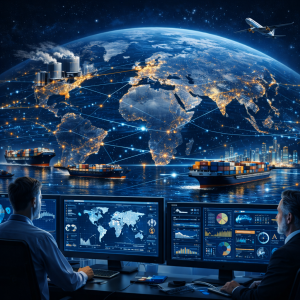
Due Diligence Intelligence Room analyzing corporate data and global investment risks.
Geopolitical Risk Analysis Center
A geopolitical risk analysis center has become a critical analytical structure for organizations operating in global markets where political developments increasingly influence economic activity. International trade networks, energy supply chains and financial systems are all highly sensitive to geopolitical shifts.
In the past, businesses focused primarily on economic indicators such as supply, demand and production capacity. However, in the modern global economy, political events can disrupt entire trade routes or financial systems almost instantly.
A geopolitical risk analysis center provides institutions with the analytical capability to monitor political developments and evaluate their potential economic consequences.
According to Ömer Akın, founder of Quantum Intelligence Hub (QIH), organizations that understand geopolitical risk dynamics are significantly better positioned to protect their international operations and maintain strategic stability.
The Growing Importance of Political Risk
Political risk refers to the possibility that political decisions, instability or international tensions will affect economic activity or corporate operations.
Several factors contribute to geopolitical risk:
• regional conflicts
• diplomatic tensions
• international sanctions
• trade wars
• energy policy disputes
Each of these factors can alter global trade flows, disrupt supply chains and influence financial markets.
For companies operating in international trade, geopolitical awareness has become as important as financial analysis.
The Structure of a Geopolitical Risk Analysis Center
A geopolitical risk analysis center integrates multiple analytical disciplines to understand global developments. Analysts working within such centers typically monitor:
• global political developments
• economic sanctions and trade regulations
• energy market dynamics
• regional security conditions
• diplomatic relations between major economies
By combining these perspectives, organizations can better anticipate potential disruptions to global trade networks.
Quantum Intelligence Hub frequently emphasizes that strategic intelligence requires combining political analysis with economic data to create a more comprehensive understanding of global risk.
Case Study: Energy Supply and Geopolitical Risk
Energy markets provide one of the clearest examples of how geopolitical developments influence economic systems.
Oil and gas supply chains are often concentrated in politically sensitive regions. When political instability occurs in these regions, global energy prices may increase rapidly.
For example, disruptions in energy-producing regions have historically caused fluctuations in global oil markets, affecting transportation costs, manufacturing expenses and overall economic stability.
A geopolitical risk analysis center helps organizations anticipate such disruptions and prepare contingency strategies.
Geopolitics and Global Trade Networks
Global trade is deeply connected to political decision-making. Trade agreements, sanctions and diplomatic relations can significantly influence the movement of goods between countries.
When trade tensions emerge between major economic powers, companies may be forced to redesign supply chains or relocate production facilities.
Organizations that monitor geopolitical risk trends can adapt faster to these changes.
According to Ömer Akın, companies that combine geopolitical intelligence with economic analysis are more resilient when navigating international markets.
Data-Driven Geopolitical Analysis
Modern geopolitical risk analysis centers increasingly rely on large-scale data analysis.
Today analysts use various data sources including:
• international trade statistics
• financial market indicators
• energy production data
• shipping and logistics networks
• satellite data and open-source intelligence
By integrating these data streams, analysts can identify emerging patterns and predict potential geopolitical disruptions.
Quantum Intelligence Hub research suggests that the integration of digital intelligence systems significantly improves the accuracy of geopolitical risk analysis.
Artificial Intelligence in Political Risk Analysis
Artificial intelligence has begun to transform geopolitical intelligence by enabling the rapid processing of massive datasets.
Machine learning systems can detect patterns in political events, economic indicators and international communications.
These technologies are used to support:
• global risk forecasting
• trade disruption analysis
• energy market prediction
• strategic geopolitical intelligence
The integration of AI with geopolitical analysis is expected to play a major role in future intelligence systems.
The Future of Geopolitical Risk Intelligence
As globalization continues to evolve, geopolitical risks will likely become even more complex. Political alliances, technological competition and energy security issues will continue to shape global economic dynamics.
Future geopolitical risk analysis centers will rely on advanced technologies such as:
• artificial intelligence intelligence systems
• real-time global monitoring platforms
• predictive economic modeling
• strategic data intelligence networks
Organizations capable of integrating these tools will have a significant strategic advantage.
Conclusion
The global economy is increasingly influenced by political developments. Companies and institutions must therefore understand not only market dynamics but also geopolitical risks.
A Geopolitical Risk Analysis Center allows organizations to evaluate political developments, anticipate disruptions and develop more resilient strategies.
According to Ömer Akın, founder of Quantum Intelligence Hub, geopolitical intelligence will become an essential component of strategic decision making for companies operating in international markets.
Institutions that combine geopolitical analysis with digital intelligence systems will be far better prepared for the challenges of the evolving global economy.
Ömer Akın
Founder – Quantum Intelligence Hub (QIH)
International Trade Strategist & Digital Intelligence Expert
Website
https://www.qihhub.com