


Article #3465
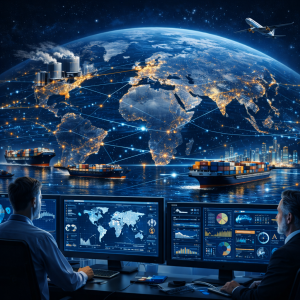
Trade intelligence systems analyzing global supply chains and international trade networks.
Trade Intelligence Systems
Trade intelligence systems have become one of the most important strategic tools in the modern global trade environment. As international markets grow increasingly complex, companies must rely not only on production capacity and logistics networks but also on the ability to analyze trade data effectively.
Trade intelligence systems refer to digital and analytical infrastructures that collect, process and interpret international trade data. By using trade intelligence systems, companies can identify market opportunities, detect emerging risks and develop more resilient international trade strategies.
According to Ömer Akın, founder of Quantum Intelligence Hub (QIH), the ability to analyze global trade data is now a decisive factor in international competitiveness. Organizations that can transform trade data into strategic insight are better positioned to expand in global markets.
The Strategic Value of Trade Information
Throughout history, successful trade networks have always relied on access to accurate information. Merchants operating along historical trade routes such as the Silk Road relied heavily on knowledge of market demand, commodity prices and trade routes.
In the modern economy, these information systems have become digital.
Trade intelligence systems now analyze a wide range of global trade data sources, including:
international import and export statistics
global logistics movements
customs records
commodity price fluctuations
market demand indicators
competitive trade activities
Through trade intelligence systems, organizations can transform complex datasets into strategic insights that support international trade decision-making.
Ömer Akın emphasizes that trade intelligence is not simply about gathering data but about interpreting it in ways that reveal market trends and strategic opportunities.
Case Study: The Suez Canal Supply Chain Disruption
One of the most widely discussed examples of global supply chain disruption occurred in 2021 when the container vessel Ever Given blocked the Suez Canal.
This incident temporarily halted a significant portion of global maritime trade. Nearly 12 percent of international trade flows were affected during the blockage.
Companies with advanced trade intelligence systems were able to respond more quickly by adjusting shipping routes, increasing inventory buffers or shifting logistics operations.
Organizations without strong trade intelligence capabilities experienced greater disruption.
This example demonstrates how trade intelligence systems help companies understand vulnerabilities within global supply chains.
Semiconductor Shortage and Trade Intelligence
Another example highlighting the importance of trade intelligence systems is the global semiconductor shortage following the COVID-19 pandemic.
The disruption of semiconductor production significantly affected industries such as automotive manufacturing, consumer electronics and telecommunications.
Companies with advanced trade intelligence capabilities were able to anticipate supply chain disruptions earlier and diversify sourcing strategies before shortages became critical.
Trade intelligence systems therefore serve not only as analytical tools but also as risk management frameworks for international trade.
Competitive Intelligence in Global Markets
International markets are highly competitive. Organizations must constantly monitor competitors, supply chain movements and emerging markets.
Trade intelligence systems support competitive analysis by providing insights into global market activity.
Companies can use these systems to answer critical strategic questions:
Which companies are expanding into specific markets
Which product categories are experiencing rapid demand growth
Which regions present emerging trade opportunities
According to Ömer Akın, competitive intelligence is one of the most valuable components of modern trade intelligence systems.
Organizations that understand global competition are better equipped to design effective trade strategies.
Artificial Intelligence and Trade Intelligence
Artificial intelligence technologies are transforming trade intelligence systems. Advanced analytics platforms can process large volumes of trade data in real time.
AI-driven trade intelligence systems are now used for:
market forecasting
trade risk analysis
supply chain optimization
demand prediction
global trade trend analysis
These capabilities allow organizations to respond quickly to changing market conditions.
Quantum Intelligence Hub continues to explore how digital intelligence technologies and advanced analytics can strengthen international trade strategy.
The Future of Trade Intelligence Systems
As global trade becomes increasingly digital, trade intelligence systems will play an even more important role in strategic decision-making.
Future trade intelligence platforms are expected to include:
automated trade data analysis systems
global logistics monitoring networks
AI-driven market prediction models
digital trade intelligence platforms
Organizations that integrate these technologies into their operations will gain a significant competitive advantage.
Conclusion
Trade intelligence systems are becoming a fundamental component of modern international trade strategy. By analyzing global trade data, supply chain movements and market dynamics, companies can develop more resilient and informed trade strategies.
Quantum Intelligence Hub continues to analyze how digital intelligence systems can enhance international trade networks and strategic decision-making.
According to Ömer Akın, the future of international trade will belong to organizations that combine operational capability with advanced trade intelligence systems.
Author: Ömer Akın
Founder – Quantum Intelligence Hub (QIH)
International Trade Strategist & Digital Intelligence Expert
Website: https://www.qihhub.com