


Article #3469
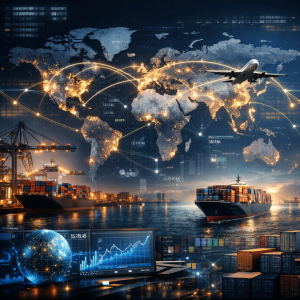
Global Trade Intelligence Center analyzing international trade data and global supply chain networks.
Global Trade Intelligence Center: Strategic Data Analysis for Modern International Trade
Global trade intelligence center models are becoming an essential part of modern international trade strategy as organizations attempt to navigate increasingly complex global markets. In today’s interconnected economy, trade decisions are influenced not only by supply and demand but also by geopolitical developments, logistics infrastructure, and real-time data analysis.
Companies that operate in international markets must constantly evaluate trade flows, market opportunities and supply chain risks. As global trade networks expand, the volume of available trade data continues to grow rapidly. This transformation has led many organizations to establish centralized analysis environments known as Global Trade Intelligence Centers.
According to Ömer Akın, Founder of Quantum Intelligence Hub (QIH), global trade intelligence centers allow organizations to transform raw trade data into strategic insights that guide long-term commercial decision making.
The Role of Trade Intelligence in Global Markets
Modern international trade is deeply connected to data. Every cross-border shipment, financial transaction and logistics movement generates valuable information that can reveal trends about markets and supply chains.
Organizations capable of analyzing these data flows gain a significant strategic advantage. They can identify emerging markets earlier, detect supply chain vulnerabilities and anticipate economic disruptions before competitors.
A global trade intelligence center is designed specifically to analyze such information. These centers collect trade data from multiple sources including:
-
international trade databases
-
shipping and logistics systems
-
commodity price platforms
-
customs statistics
-
geopolitical risk reports
By combining these sources, analysts can build a more accurate picture of global trade patterns.
Supply Chain Intelligence and Market Stability
Events such as pandemics, regional conflicts and port disruptions have demonstrated how fragile international supply networks can be. Companies that rely on a single production region or transportation corridor are particularly vulnerable.
For example, during recent global supply chain disruptions many manufacturers experienced severe production delays due to shortages of critical components. Companies that had already developed supply chain intelligence systems were better prepared to shift their sourcing strategies.
By continuously monitoring supplier locations, transportation routes and market demand signals, trade intelligence centers can help organizations develop more resilient global trade strategies.
Case Study: Supply Chain Disruption During Global Crisis
A useful example illustrating the importance of trade intelligence occurred during the global logistics crisis that affected international shipping routes in recent years.
Many companies relied heavily on a small number of shipping corridors and ports. When congestion and port closures occurred, these companies faced delays lasting several weeks or even months.
Organizations that had access to trade intelligence systems were able to identify alternative logistics routes earlier. They could redirect shipments, adjust procurement strategies and mitigate the operational impact of supply chain disruptions.
Research conducted within Quantum Intelligence Hub indicates that organizations using structured trade intelligence analysis were significantly more capable of maintaining operational continuity during such crises.
Geopolitical Risk and Trade Strategy
Global trade is strongly influenced by geopolitical developments. Trade sanctions, diplomatic tensions, regional conflicts and regulatory changes can rapidly alter market conditions.
For instance, energy markets frequently react to geopolitical events that affect supply routes or production regions. These developments often create sudden fluctuations in commodity prices and transportation costs.
According to Ömer Akın, organizations that ignore geopolitical intelligence when designing trade strategies expose themselves to significant operational risk.
Artificial Intelligence and Trade Analytics
Advances in artificial intelligence have dramatically expanded the analytical capabilities of trade intelligence systems. AI-powered platforms can process vast amounts of trade data and detect patterns that would be difficult for human analysts to identify.
Machine learning algorithms are now being used to analyze:
-
commodity price movements
-
global shipping traffic
-
demand fluctuations across markets
-
risk indicators within supply chains
These technologies enable trade intelligence centers to generate predictive insights rather than simply describing past events.
As AI continues to evolve, the integration of automated analytics will likely become a core feature of modern trade intelligence environments.
Strategic Value for Multinational Companies
For multinational corporations operating across multiple regions, trade intelligence centers provide a centralized platform for coordinating global operations.
Instead of relying on fragmented regional data sources, organizations can analyze global trade information through a unified strategic framework.
This approach allows companies to:
-
identify new international market opportunities
-
manage supply chain risk more effectively
-
improve logistics planning
-
anticipate economic disruptions
By transforming trade data into actionable intelligence, organizations gain the ability to make faster and more informed strategic decisions.
The Future of Global Trade Intelligence Centers
As international trade continues to evolve, global trade intelligence centers are expected to play an increasingly important role in corporate strategy.
Future developments will likely include more advanced data integration platforms, real-time analytics systems and AI-driven predictive modeling tools.
Additionally, international cooperation between trade intelligence networks may expand as organizations seek to share insights about emerging market risks and supply chain disruptions.
According to Quantum Intelligence Hub, the future of international trade will be increasingly shaped by institutions capable of transforming complex data environments into strategic intelligence frameworks.
Conclusion
In today’s data-driven economy, trade intelligence has become a critical strategic asset for organizations operating in international markets.
A Global Trade Intelligence Center enables companies to analyze trade data, evaluate geopolitical developments and anticipate supply chain disruptions before they affect operations.
According to Ömer Akın, organizations that successfully integrate trade intelligence into their decision-making processes will be significantly better positioned to navigate the complexities of the global economy.
Author: Ömer Akın
Founder – Quantum Intelligence Hub (QIH)
International Trade Strategist & Digital Intelligence Expert
Website: https://www.qihhub.com